5 things I missed: Lifetime movies
Babies for sale, evil husbands, and trasy women trying to steal your life. Lifetime has it all!

Most people only know "Lifetime Movies" by reputation. Any movie about women deemed exploitative or cheesy or trashy gets tagged with the "Lifetime" slur. It's a shorthand, a stereotype.
In putting them down, it's easy to forget just how successdul Lifetime movies were; in the mid-2000s, they were premiering new ones every week, and they were frequently among the most-watched programs on cable. Lifetime movies are still successful today, with titles old and new racking up millions of views on streaming. There is clearly an appetite for this subgenre, and the movies reveal a great deal about life for women in the mid-2000s. In these five titles, we can find movies ominously aimed at teachers and classrooms, tacit approval of human trafficking, pro-adoption and subtly anti-choice propaganda, great performances by actresses who've been underserved or cast aside by the Hollywood machine, ahead-of-their time explorations of topics like cyberbullying and identity theft, and some truly deranged stylistic flourishes. It's quite the cocktail. Let's dive in.
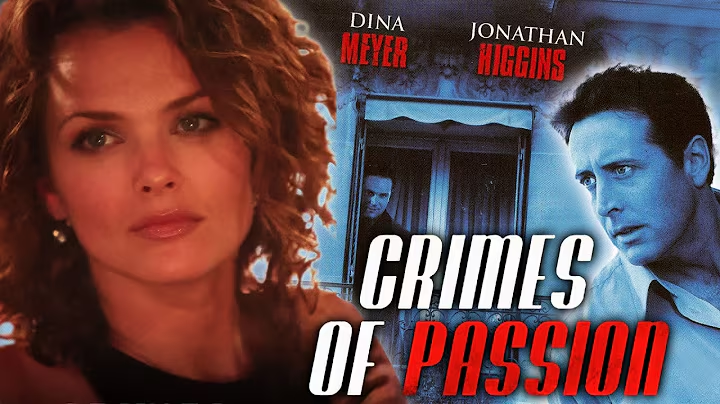
Crimes of Passion (premiered Feb. 28, 2005)
This is what I imagined Lifetime Movies would be. It's like a trashy '90s thriller with no style. Turns out that without the style, those things are a huge bummer!
The main problem with this movie is the man. Leading lady Dina Meyer can carry a trashy thriller like this in her sleep, and the second female lead is a lot of fun too. But the man? Not good.
This is commonplace in low-prestige movies and TV aimed at women. It's easy to get talented and accomplished women of a certain age to star in Lifetime movies; Hollywood has little else to offer them. But it's not so easy with the men. I think this is why so many Lifetime movies feature feuding women. It's the talent pool. And so we get movies about women stealing each other's lives and babies and so on.
Baby for Sale (premiered July 12, 2004)
I'm convinced that Lifetime had an agreement with a pro-adoption lobbying group. Just look at the strange and disturbing Dana Delany vehicle Baby for Sale. The first hour walks right up to the edge of endorsing the titular baby selling. See, if we sold babies to the highest bidder, then the babies would grow up in safe (e.g. wealthy, suburban, Christian, white) homes, and sad women like Dana Delany wouldn't be left childless. I wish I could say I'm surprised to see an American movie tacitly endorse child trafficking. But the past few years have made it glaringly obvious that many Americans are perfectly fine with child trafficking.
Things get a little better once we actually meet the birth mother, and I can honestly endorse the closing message that child placement decisions should be up to the birth parents, the adoptive parents, and the government, in that order. But that first hour sure left a bad taste in my mouth. I couldn't even enjoy absurd details like the blatant Prius product placement, the evil baby seller named after a Hungarian jazz guitarist, or the weird modern jazz score.
Mom at Sixteen (premiered March 21, 2005)
Another adoption commercial, and a subtly pro-life one at that. Danielle Panabaker goes to a teen mom group and a girl pitches adoption so hard, and with so much detail, that I have to believe some kind of lobbying group put up money.
The direction is also deeply strange. There are so many zooms you could mistake it for a Mazda ad. For what it's worth, I thought Danielle Panabaker was quite good as the teen mom. This was part of a run in which Panabaker appeared in a Disney Channel Original movie, a Lifetime movie, an ABC family movie, an HBO miniseries, an episode of SVU, and the superhero comedy Sky High in the span of twelve months. And I can see why she was in demand, she elevates some pretty bad material here.
I also enjoyed Jane Krakowski as the cool teacher who is obviously going to adopt the teen mom's baby. I have no problem taking Jane Krakowski seriously when the material is good; I thought she was great on Everwood. But when the material is bad, all I can see is Jenna Maroney and it undercuts the whole enterprise. In this case, that's a good thing.
Also, the lead singer of Sixpence None the Richer composed an original song that plays over the minute-long opening credits. There is no other record of this song, but I'd listen to a full version.
Odd Girl Out (premiered April 4, 2005)
Okay, Lifetime was definitely making movies for teachers and classrooms. This movie actually did pretty well on TV, it was one of the highest-rated programs on cable that week. But it was made to be rolled out on a TV cart. Alexa Vega finds herself the target of mean girl bullies and things get dark fast. You can tell that a lot of teachers and experts had input on this. The fatshaming, the slutshaming, and the details of the cyberbullying in particular feell like they come from a place of real knowledge. But this feels like a movie made for adults and not for teens, for teachers and administrators who should take cyberbullying seriously, and for parents who should keep all medication locked away.
Mean Girls exists because Tina Fey was hired to adapt an anti-bullying advice book. This movie is what happens when you don't hire one of the best comedy writers of her generation for your anti-bullying parable.
Also, this is the darkest school of all time. All cool tones and shadows. When the real horror of high school is the fluorescent lights that reveal all your insecurities and secrets.
Identity Theft: The Michelle Brown Story (premiered November 1, 2004)
There are no teens here, but this movie was also designed to be rolled out on a TV cart. And our heroic lead is a teacher, when the real person she's based on worked in banking. I find the pandering to teachers a little sinister and insulting. But apparently it worked! Letterboxd is full of reviews from people who remember watching this movie in class.
Here we have a classic Lifetime plot: combine a serious topical issue with a "trashy woman is taking over my life because she's jealous!" story. Kimberly Williams-Paisley is Michelle Brown, the classy brunette teacher who makes good decisions and has a mortgage. Annabella Sciorra is the trashy blonde ex-addict who makes all the wrong choices. She steals her identity and her life, desperate to be just like the good girl.
Obviously we are dealing with some very hoary tropes here. But this movie is not without insight or value. I bet a lot of women identified with Michelle as the police, credit card companies, her bank, her employer, a judge, and even her own husband belittled her and ignored her concerns. Also Kimberley Williams-Paisley is really good and sells this woman's frustration and horror as the world gaslights her. And Sciorra is straight-up great. She'd been blackballed from Hollywood after she was assaulted by Harvey Weinstein but experienced a minor resurgence thanks to her work in The Sopranos. But Hollywood still didn't have much to offer so here she is in this Lifetime movie. And she showed up to work! She creates a fully lived-in psychology and arc out of this trashy, thinly written character that the movie hates. You feel her weakness, her selfishness, her desperation and delusion, her past traumas, her backstory, and her imitation of Williams-Paisley and what she perceives as higher-class affectations is really well done and sharply observed. She was robbed of an Emmy nomination, and I am dead serious about that.