What was on TV? Sun, May 15, 2005
Glee, grief, and self-sabotage. The season finale of Survivor and a funeral on Deadwood. Plus Grey's Anatomy, King of the Hill, and Malcolm in the Middle.

In 2005, the word "glee" meant nothing but joy and maybe those dorky singing clubs if you thought about it. Let's see what was on TV.
7:00 King of the Hill on Fox
9x15 "It Ain't Over 'Til the Fat Neighbor Sings"
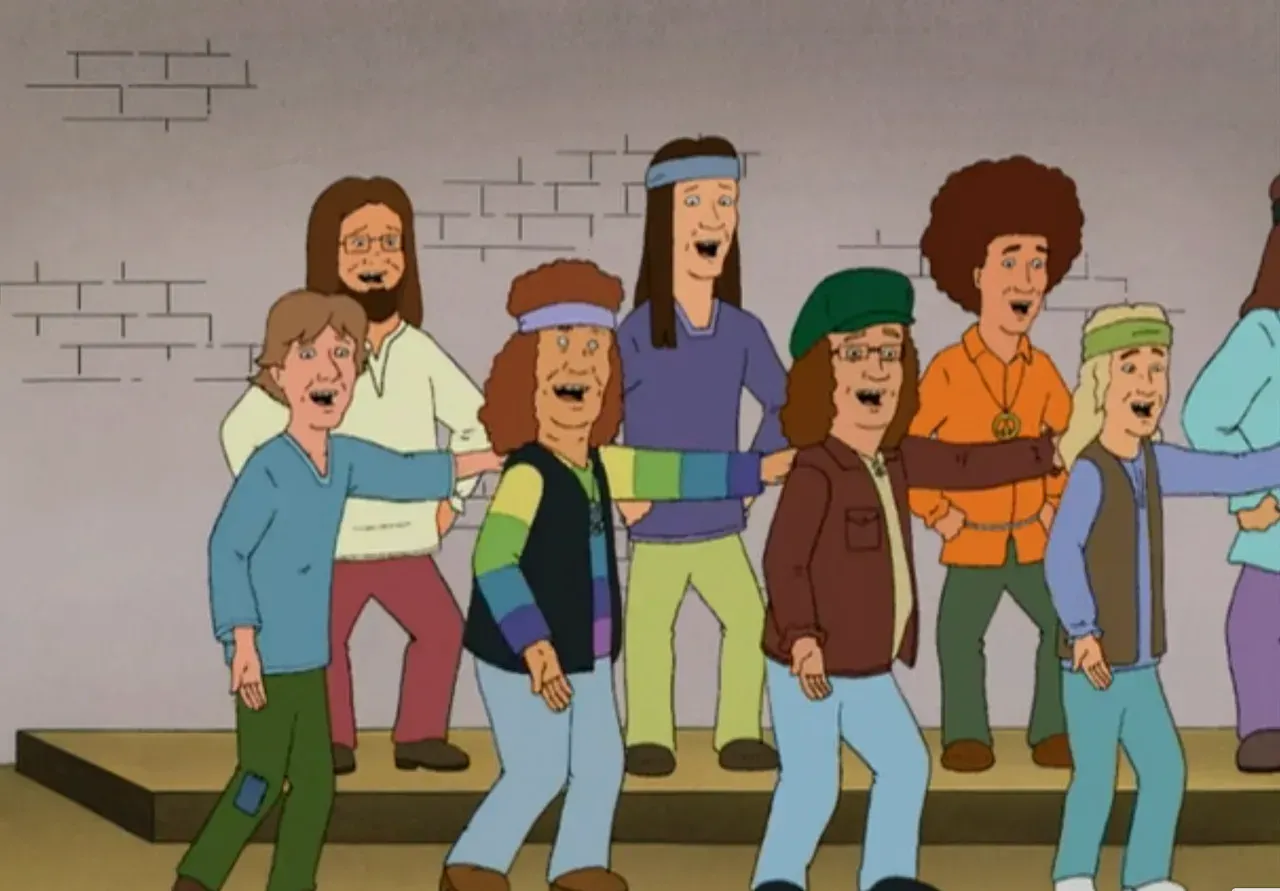
It's weird to see a Fox show tackle glee clubs in 2005, knowing that Glee itself would premiere four years later. And if you told me that a Fox show tackled Glee clubs in 2005, I never would have guessed it was King of the Hill. Bones, Malcolm in the Middle, The Simpsons, House? Sure. But King of the Hill? It's weird, which is why it makes perfect sense.
This isn't my favorite King of the Hill episode. The satire of glee clubs is mean and not very insightful. But it is still a nice parable about friendship. The experience of watching your depressed friend become consumed by a new hobby and a bunch of assholes is well realized. And even if the portrayal of the glee club is mean and skirts the boundaries of good taste, Dale's roast of them is genuinely hilarious. "This chorus is the feces that is produced when shame eats too much stupidity! You people make me envy the deaf and the blind!" I'm going to have to steal that.
7:30 Malcolm in the Middle on Fox
6x22 "Mrs. Tri-County"
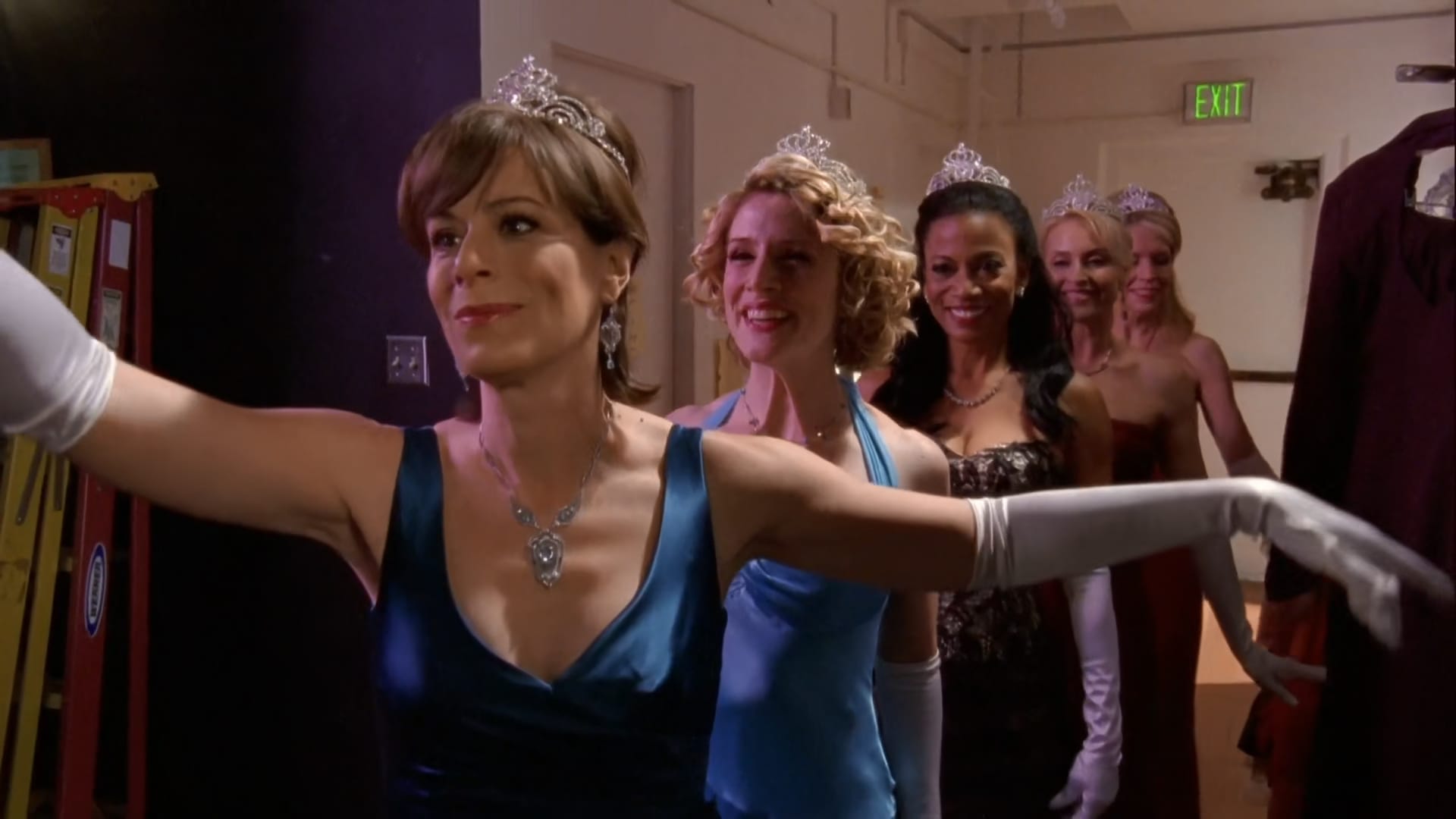
I think of the pageant boom as more of a '90s phenomenon. Vanessa Williams, Miss Congeniality, Drop Dead Gorgeous, all evidence that these absurdities were pretty mainstream. But I guess the pageant boom lasted into the mid-2000s since Malcolm decided to do a pageant spoof in its midseason finale. I think that Trump actually extended pageant culture's moment in the sun, since Miss USA was one of his biggest ventures. So when his profile grew with The Apprentice, so did Miss America's less classy cousin.
It would be nice to believe that we moved beyond pageant culture. But this episode is about a pageant for older women. By the late 2000s, we'd grown more interested in pageants about tiny girls: Little Miss Sunshine, Toddlers and Tiaras, and so on. Grim.

9:00 Survivor on CBS
10x14 "The Ultimate Shock" (record Deadwood on HBO, Mystery! on PBS, and Desperate Housewives on ABC)
The centerpiece of this episode is superb television. Tom and Ian, longstanding allies, sit on booeys for almost 12 hours in the final immunity challenge. Production was totally unprepared; they had to figure out how to film them in the dark. The endurance is extraordinary. But as is always the case in Survivor, social skills are the key. First Tom tries to convince Ian to jump down, promising he'll take him to the final two (not a bad deal, the runner up gets $100,o00 dollars). But eventually Ian offers to step down voluntarily, to gain back his integrity and Tom's friendship.
Here, we can see some of Tom's truly diabolical work pay off. He nurtured his friendship with Ian and bristled at every slight. That day, when Ian let slip that he wouldn't take Tom to the end, Tom got all huffy about the betrayal. Ian protested that this is a game and that this game is famously not about integrity. But he seemed shaky, stumbling over his words at tribal council in front of the jury. And after twelve hours, he cracked. Tom befriended and manipulated this very young person into doing something truly stupid and self-destructive on national television. It's genuinely hard to watch. It feels cruel in ways that go beyond the cutthroat game of Survivor.
What makes it harder to watch is that the show has always presented Tom as a hero, and continues to do so in this episode. That's pretty hard to swallow after this episode. It left a bad taste in the mouths of critics and fans who had bought into Tom's hero narrative and his friendship with Ian back in 2005, even if Tom was an remains a very popular winner. But I yearn for a show that presented Tom as a shark the whole time, but Survivor didn't do that.
In final tribal council, we see clearly that heroism is as much about aesthetics and narrative as it is about your choices. Coby absolutely tears into Tom in his jury speech, saying that he played this game ruthlessly, the way he wishes he could have. That's a very interesting insight. Coby, as a gay man, would never have been perceived as heroic had he manipulated Ian the way Tom did. I shudder to imagine the discourse.
Coby makes a very ahead-of-its-time argument, asking Tom to own his ruthlessness. Tom refuses to abandon his heroic narrative, offering vague platitudes instead. It was the right decision, but it didn't convince Coby. He voted for runner-up Katie instead, denying Tom a perfect game.
Katie is another example of who doesn't get to be heroic in Survivor. The jury absolutely tore into her. Some of them had good arguments. Coby argued that she relied on her alliance and failed to play the game outside it. Jenn (see more on her at the end of today's post) argued that her overreliance on powerful men made it tough to respect her. But some people were just nasty. She was lazy, she was bad at challenges. Gregg called her "pathetic" and made her cry. But Katie held her own. She was resolute in her argument: she used the tools available to her and played the best game possible. She was in a tribe dominated by men, characterized by chauvinism (Jenn called that out in her jury speech to Tom). Her best bet was to make nice with the men. She was honest, and this won Coby's vote. People argue she was bad at challenges but I would love to ask her if this was intentional. Tom would have been threatened by a woman who was good at challenges. In the final four obstacle course challenge in this very episode, Katie seems like she's barely trying. But in the final immunity challenge, Katie stands on that booey for five hours. It would be remembered as an astonishing feat if not for the absurd and tragic spectacle of Tom and Ian.
So even if I yearn for Tom's villain edit, this was still a superb season of reality television, filled with fascinating characters, strategy, twists, and turns.
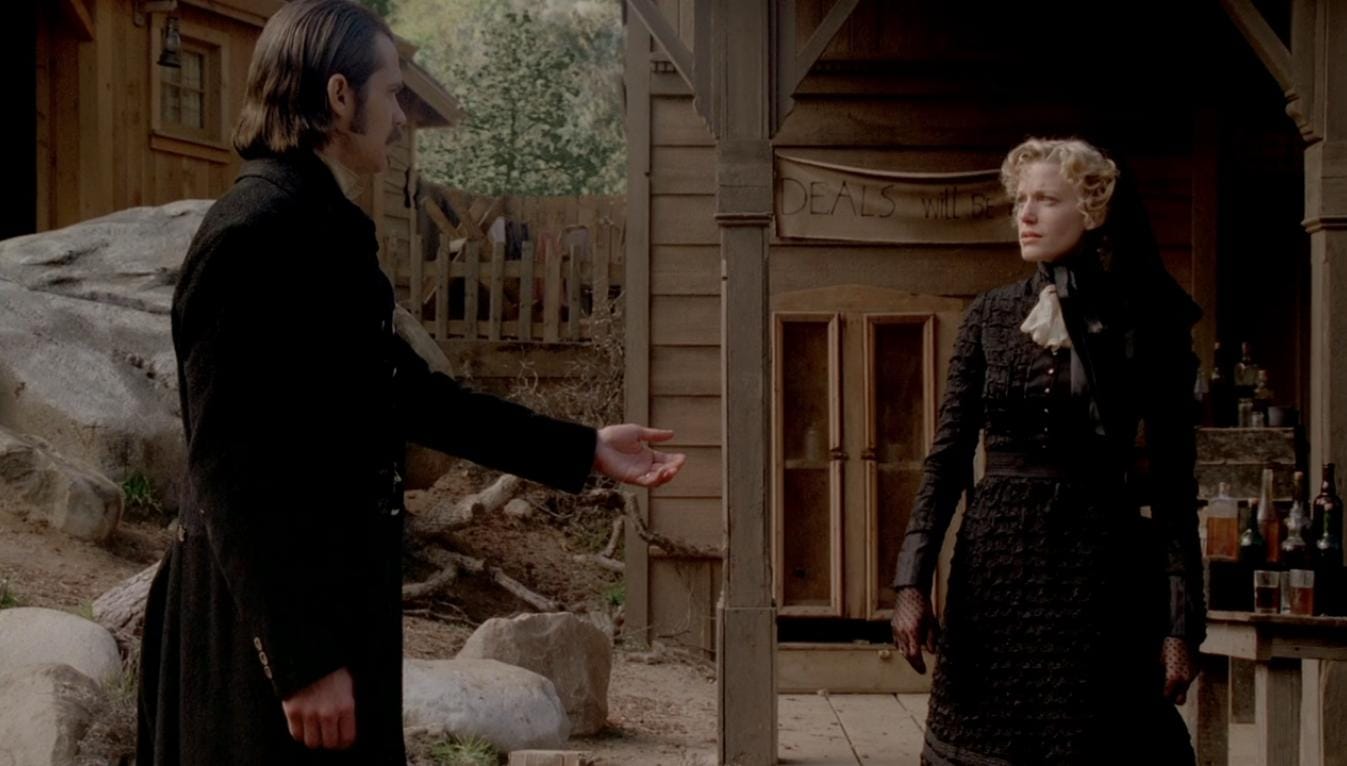
11:00 Deadwood (recorded)
2x11 (record Grey's Anatomy on ABC and Survivor on CBS)
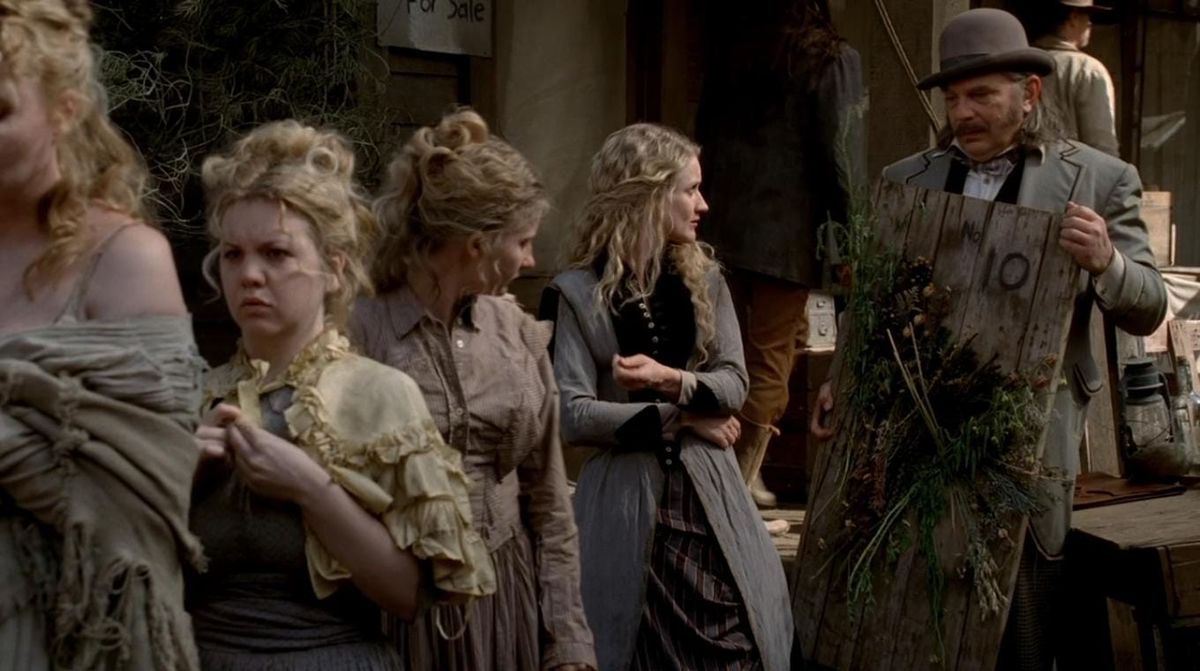
It's the coldest take ever, but Deadwood really resonates with the America of today, just as it did with America in the Bush Era. Here, we see Deadwood process a terrible tragedy: the death of a child. Tragedies usually inspire unity and generosity on television. And we see that here: between Seth and Martha, between Alma and Sofia. The entire funeral is exquisite. Even Cy Tolliver shows some moral backbone. But the death of a child forces everyone to conduct their business more covertly. Haggling and getting what's yours in front of grieving parents is just gauche. And while there are fleeting moments of grace and generosity, it's mostly people declining to process the horror they've just experienced and turning it into nastiness. Betrayal, racism, pettiness, people saying shit just to say shit and stop feeling something and pissing everyone off. It feels all too familiar.
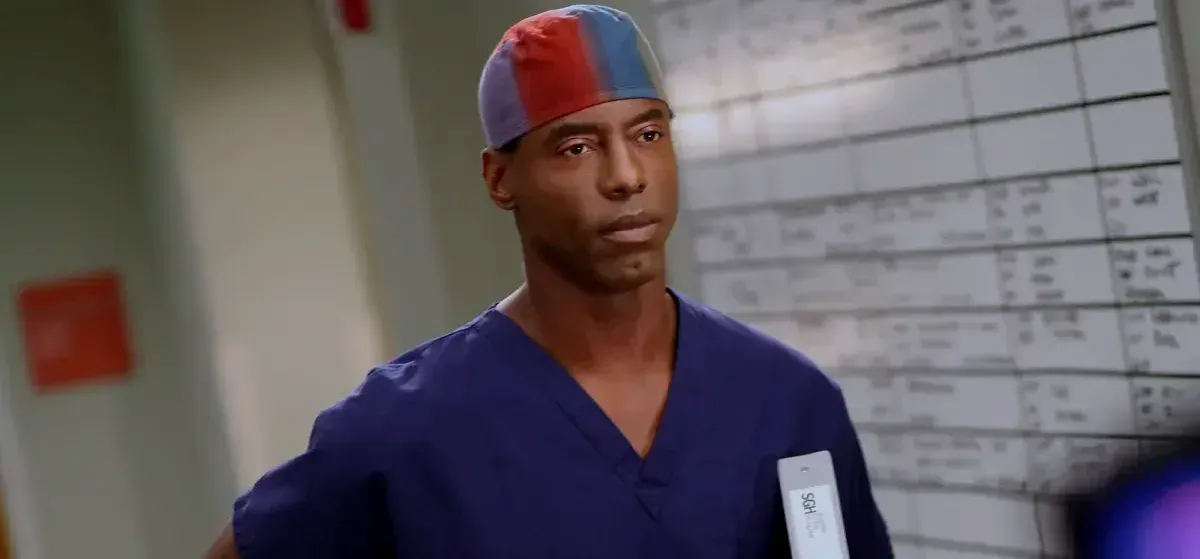
Later Grey's Anatomy (recorded)
1x08 "Save Me"
Don and Peggy. Dr. Carter and Dr. Benton. Harper and Eric. Diane Lockhart and Alicia Florrick, Diane Lockhart and Cary Agos. TV's best relationships are mentorships. Now other medium can explore these relationships in all their surprising intimacies and complexities like the small screen.
Grey's Anatomy has had a number of excellent mentorship storylines across its decades-long run (Cristina and Teddy, Jackson and Sloane, Addison and Izzie, and Arizona and Alex are particular favorites of mine). And you see that starting here. It's all over the episode: with George, with Meredith and Derek, even Cristina and Bailey. But you see it most in Burke's storyline, in which he treats an Orthodox Jewish teenager who refuses a porcine valve replacement. Intern Alex offers a bovine valve as an alternative. Burke shoots him down, you should have asked me first, you're not the doctor. But when he talks to his girlfriend, the real problem emerges: he's never done a bovine valve replacement before, and he's afraid to mess up. Of course Cristina whips him into shape: do research, ask for help, and do your job. Here we see Burke's insecurity and Cristina's insatiable desire to learn. We see that despite her abrasive demeanor and confidence, she is less burdened by pride, and more driven by the patient's needs than her boyfriend. Look closely and you can see the subtle undercurrent that makes Grey's Anatomy's richest mentorship so interesting: she will surpass him. She will be a better surgeon and a better doctor. And they both know it. It will take years for this to become obvious, and even longer for either of them to say it out loud. But it was always there.
What Else Was On
- Special Sweeps Guest Star: Henry Winkler on Crossing Jordan
- Gloria Steinem appeared as herself on The L Word
TiVo Status
One episode of Desperate Housewives, one episode of Mystery!, and the Survivor reunion. 3 hours.
RIP Jenn Lyon
I wanted to write a tribute to Jenn Lyon in her boot episode, but I failed to realize that her boot episode was also the finale. But Jenn Lyon occupies a very important place Survivor history and thus the history of reality television itself. She was diagnosed with breast cancer a couple of months after this reunion was filmed, and in 2010 she was the first Survivor contestant to die (another contestant from this season, alt girl Angie, also died from cancer in 2021). A reality star dying not from drugs or the ravages of fame but from a more quotidian tragedy like cancer made the genre seem more ordinary, like a true institution.
Lyon's story also exposed some of the more positive aspects of reality televison. She used her platform as Survivor alum to blog ber experience and draw more attention to breast cancer. And she didn't just offer platitudes. She was frank: she didn't get diagnosed for more than a year because she didn't have insurance (she probably had early stage cancer while competing in Palau). When she first noticed a lump, she thought it was scaring from her breast implants (admitting to plastic surgery was genuinely brave in 2005). She discussed her mascestomy in detail, and how while her decision to get breast implants was driven by insecurity, her breast reconstruction surgery was intentional and empowering. These are the kinds of insights other people can learn from and act on, whether they'd just found a lump and aren't sure if they should go to the doctor or they're living with the disease and they're terrified. In 2005, she opened a Christmas tree lot, wanting to extend what she knew would be her final Christmas as much as possible, donating to proceeds to cancer research. She showed that the reality alums can use their platforms in important and valuable ways, and many others have followed in her footsteps.
And the Survivor community was an incredible support system during her five year battle with cancer. Tribemate Coby was a hairdresser, and cut her hair when she went through chemo, then shaved his own head too. Jenn was clearly very popular among fellow contestants (had she reached the end Tom would have been in big trouble). She loved going to social events with fellow contestants. People often described reality television in apocalyptic terms in the 2000s: it was ruining society, and ruining the lives of anyone who participated in it. Lyon's story, sad as it is, provides a valuable and fascinating counternarrative.